Our work / Locus
Locus
Handheld ultrasound probe
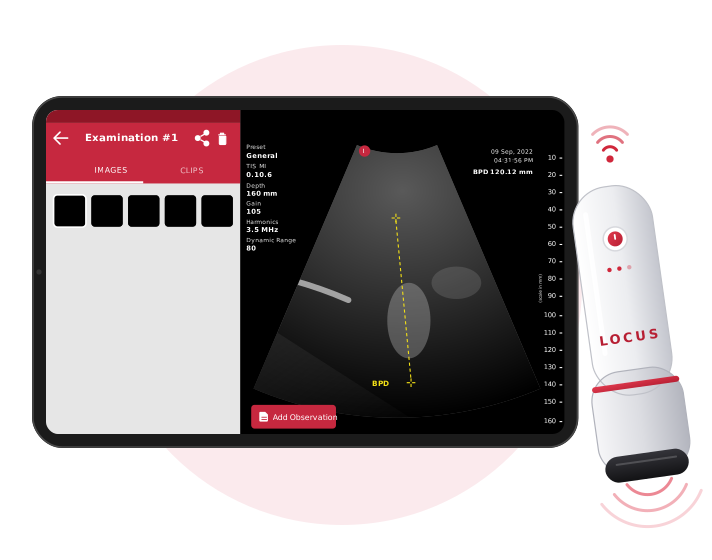
A wireless handheld probe that pairs with an Android tablet or smartphone for point-of-care imaging. Works without an internet connection, and scans can be stored, annotated and shared.
- Category
- Medical imaging
- Form factor
- Handheld probe + Android app
- Connectivity
- Wi-Fi Direct, no external network required
- Power
- USB or wireless charging
- In development
- AI image enhancementgender maskingextended batterytelemedicine integration
Portability is the start, not the whole design
Capabilities

High-resolution imaging
Despite the size, clinicians get clear visualization of internal organs and tissues — the baseline for accurate diagnosis.

Hours of continuous scanning
USB or wireless charging, with enough runtime for rural clinics and ward rounds without a mains outlet in sight.

Store, annotate, share
Scans can be saved, marked up and shared securely, which is what makes colleague review and remote consultation possible.

Works without a network
Wi-Fi Direct handles secure transmission without relying on external networks or internet connectivity.
What is happening inside the shell
Architecture
Signal to screen in four layers. The hard part is not any one of them — it is keeping the link between the probe and a consumer mobile device reliable enough for clinical use.
- Acquisition
- Miniaturized ultrasound transducer arrays capture the detailed signal.
- Processing
- Embedded firmware conditions the signal before transmission.
- Transmission
- Wi-Fi Direct modules send data securely with no external network required.
- Interface
- Android application with zoom, annotation and on-screen measurement, plus cloud storage and sharing.
Tested where it has to work
Field testing
Locus has been tested with clinicians in both rural hospitals and urban healthcare facilities. Point-of-care ultrasound at the bedside avoids moving patients between departments; in trauma care it has been used for Extended Focused Assessment with Sonography in Trauma (EFAST) examinations, where responders performed quick scans to guide immediate decisions.
Those deployments point at versatility rather than a niche. The device is built for healthcare providers across contexts, not only underserved ones.
Currently in development
- AI-powered image enhancement for sharper diagnostics
- Gender masking for privacy in sensitive contexts
- Extended battery life for longer field operations
- Telemedicine integration connecting rural clinics to urban specialists
Built in the same workshop